Guide
Rope ladders
Rope ladder Table of Contents Introduction Selection: Which rope ladder is suitable for which purpose? Length & location: Estimate height correctly Material & workmanship: wood, rope, metal and details Security & emergencies:…
Discover matching products ↓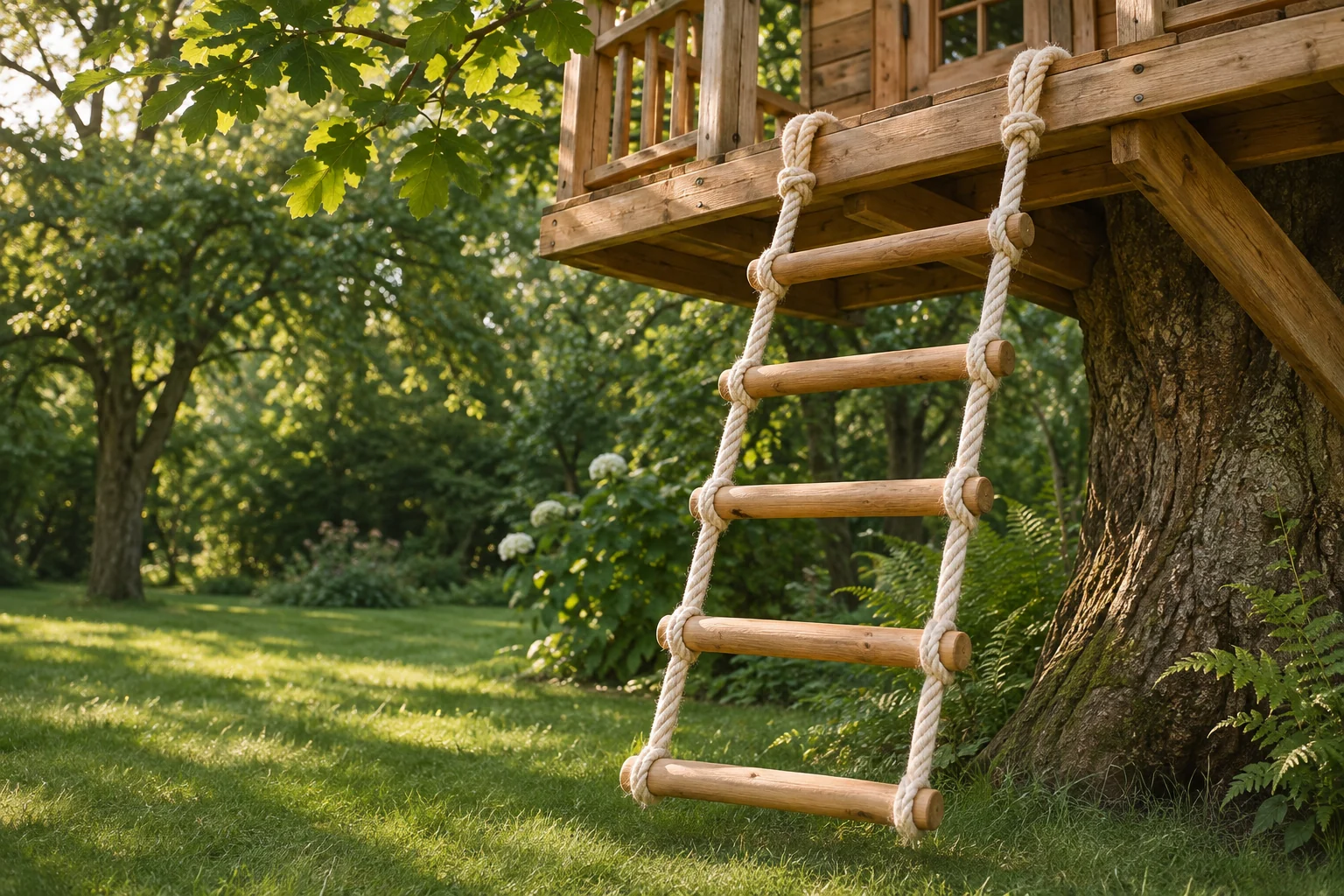
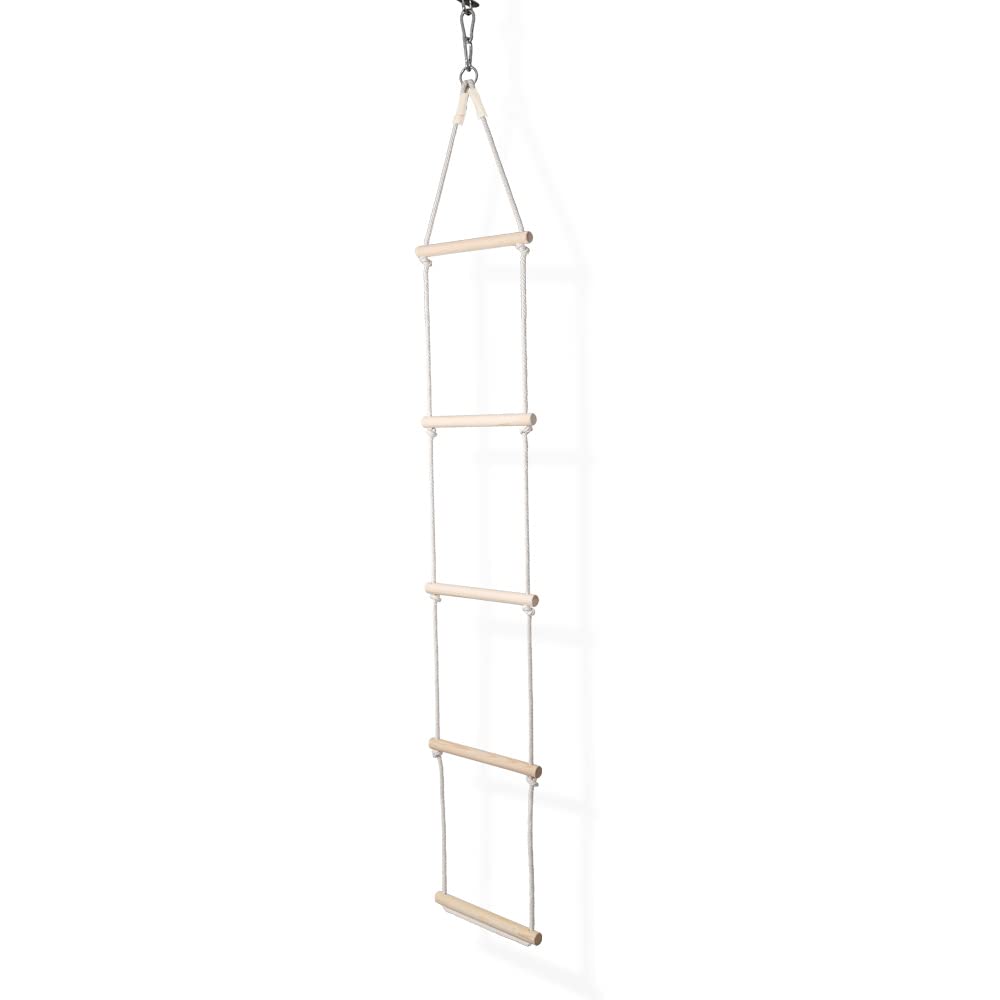
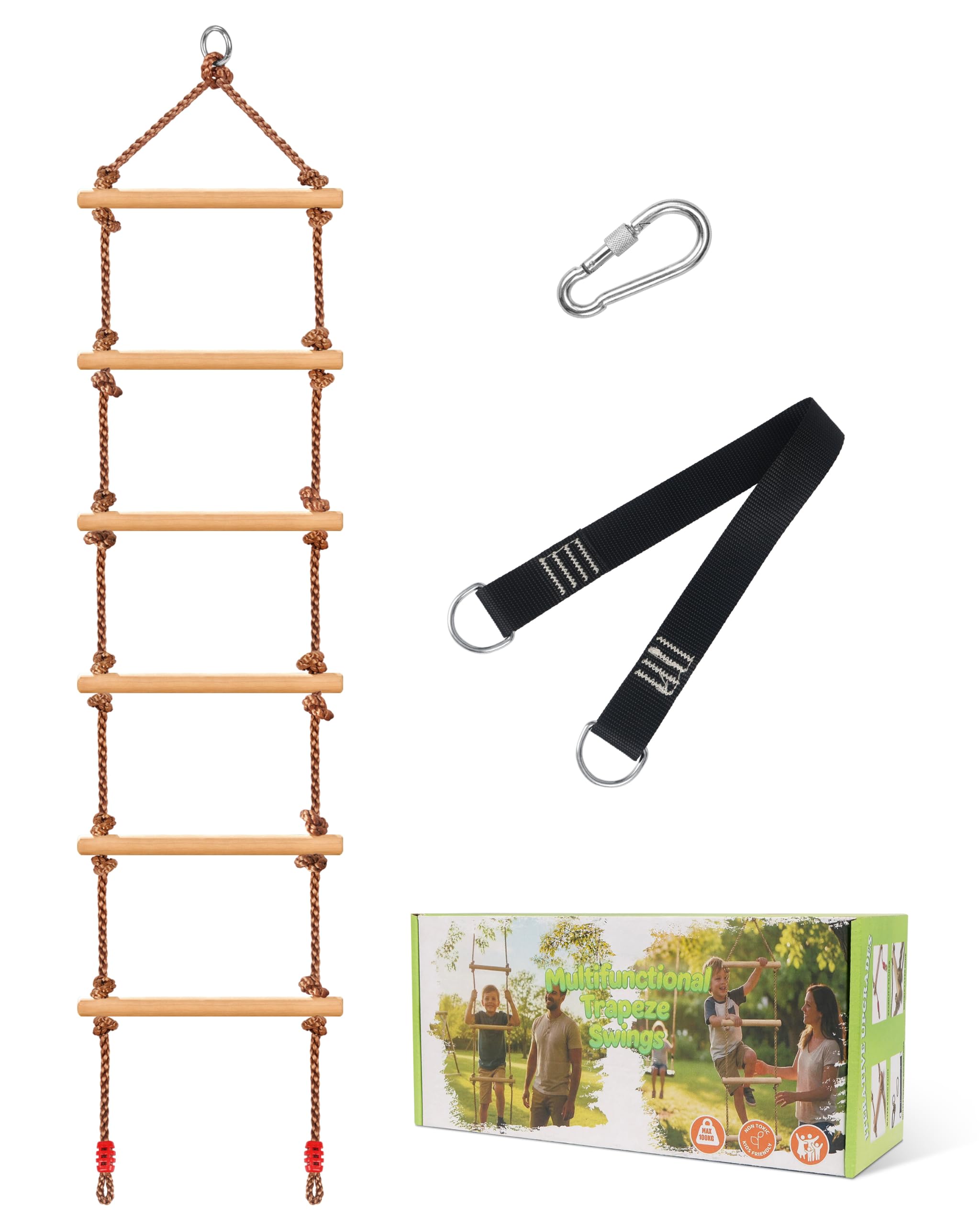

Automatically translated from the German original.
Rope ladder
Understanding rope ladders: use, benefits and what really matters
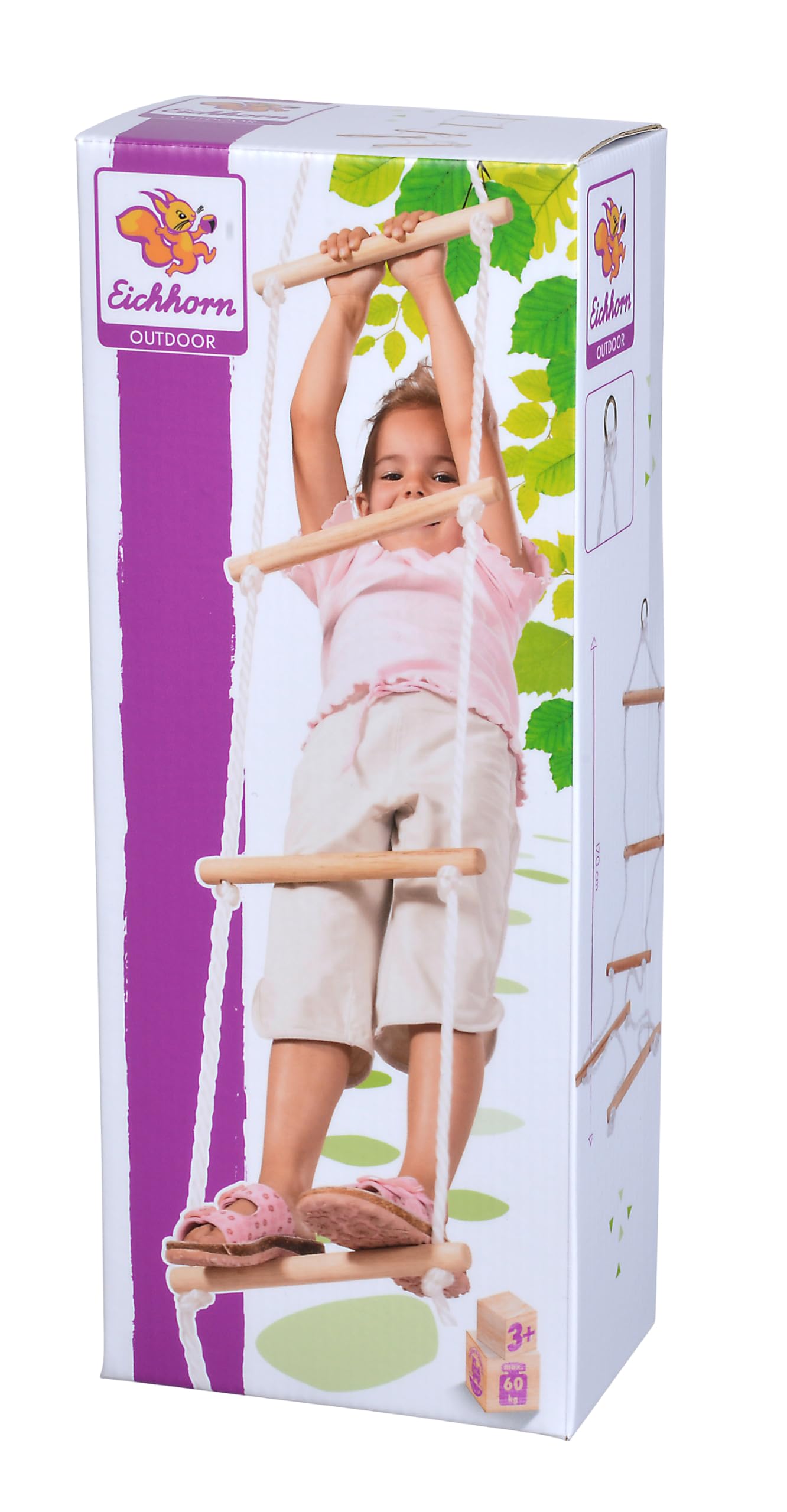
A rope ladder is much more than just “a ladder made of rope”. It is a flexible aid that, depending on the version, can be a play device, a climbing aid or a safety solution - and that is exactly why it is worth briefly sorting out your own requirements before purchasing. In the garden, the rope ladder is often used to reach a tree house or climbing tower. Children love the little adventure: Instead of a rigid ladder, a movable element is created that requires coordination, grip strength and body awareness. At the same time, a rope ladder must function reliably: rungs must not splinter, ropes must be cleanly processed, and the suspension must be suitable for the planned load. Anyone who saves money here or chooses “pi times thumb” risks unnecessary wobbling, rapid wear and tear or, in the worst case, injuries.
To ensure that a rope ladder lasts for a long time, three questions play a central role: Where will it be used (indoors, outdoors, on a boat, in an emergency)? Who uses it (just children or also adults)? And how is it attached (tree, beam, wall, ceiling)? Only when these points are clear can the length, material and rung spacing be selected sensibly. Many models combine robust ropes with wooden or metal rungs and are designed so that they can be stored to save space - an advantage if the ladder is not intended to hang permanently. At the same time, one must not forget: movable ladders behave differently than rigid ladders. They swing, react to lateral loads and need a clean, torsion-proof suspension. In the following sections you will receive practical guidance on how to choose a suitable rope ladder, how you can recognize quality and which safety aspects are particularly important in everyday life and emergencies.
Selection: Which rope ladder is suitable for which purpose?
The most important step before purchasing is to decide what the rope ladder is really intended for: as a play element, as access to elevated points or as equipment for special situations. For typical garden projects - tree house, platform, climbing tower - a classic rope ladder with grippy rungs is often the best choice because it offers a good balance of stability and mobility. If you want to read up on the topic and compare different designs, it's worth taking a look at the category
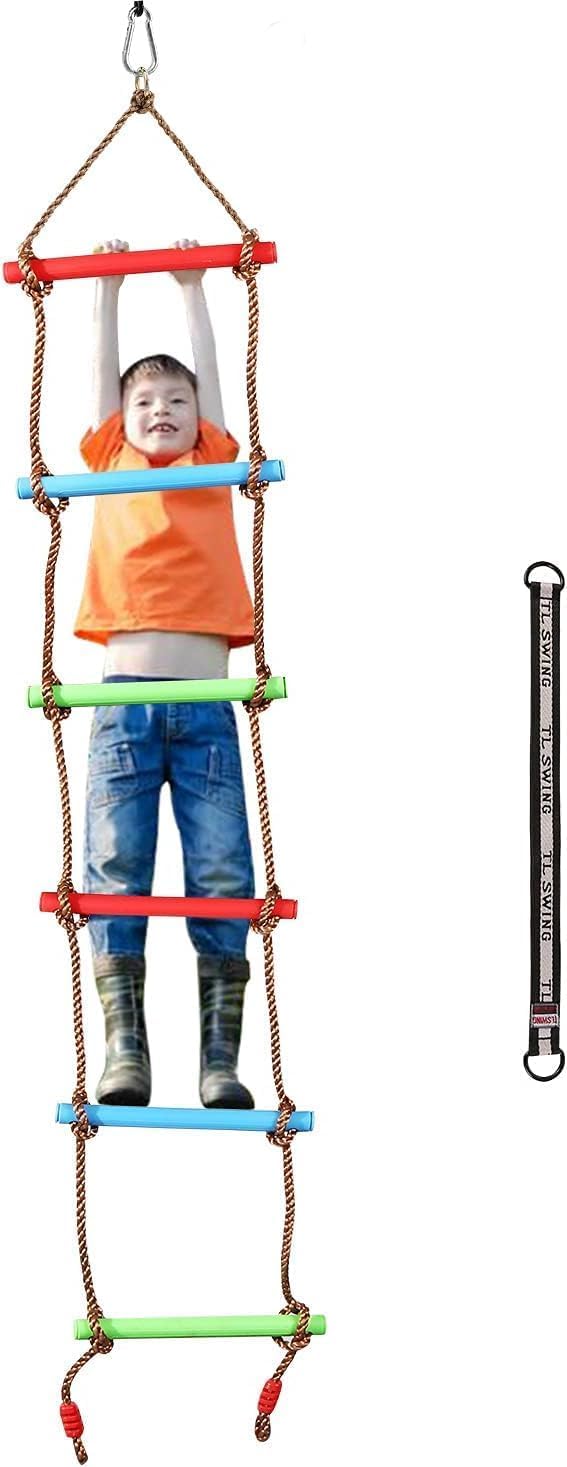
Rope ladder, because the common variants and application ideas come together there in a clear manner. It is also crucial for families whether the ladder is primarily used by children: then the rung spacing should be child-friendly, the surfaces should be comfortable to hold and it must be clear how the ladder is secured against excessive swinging. You can find information specifically tailored to young people at
Rope ladder for children– helpful to avoid typical mistakes (rungs that are too smooth, wrong height, unsuitable suspension). In addition to the purpose, the environment also plays a role: outside, weatherproofness counts, inside, clean assembly and an adequate safety area are more important. Also, remember that a rope ladder doesn't just mean "up and down." It is a movable training device: Anyone who climbs automatically works on coordination, body tension and grip strength. This is exactly why quality and workmanship should be given greater weight than the pure price. Pay attention to neatly fitting knots or tight crimps, even rung spacing, a stable end solution at the bottom and a suspension that does not wear out or twist under load. If you want to remove the ladder more often, a solution with suitable rings or carabiners can make sense - provided that the attachment points are suitably sized. This turns a “simple rope ladder” into a reliable, safe element that fits the application profile and provides long-term enjoyment.
Length & location: Estimate height correctly
The right length determines whether a rope ladder is practical to use or just hangs “somehow” at the end. So don't just measure the height to the suspension point, but also plan realistically: Where should the feet start, how much ground clearance makes sense, and how comfortable should it be to get on? For many garden projects, a medium length is sufficient - and this is where standardized sizes often come in handy because they fit without major detours and are easy to replace. If you want to cover a typical area such as a treehouse, balcony or pedestal, one is
Rope ladder 5moften a good starting point. It offers enough range for many applications without becoming too unwieldy. For significantly higher points - for example on facades, high balconies or special training setups - one can
Rope ladder 10 mmake sense, but this also significantly increases the demands on suspension, storage and controlled climbing. Basic rule: The longer the ladder, the stronger the swing and the more important it is to have a really stable attachment. In addition, more dead weight acts on the rope, knots and suspension points. For longer ladders, also plan how you will store them (dry, UV-protected, not bent) and whether you want them to be quickly accessible in everyday life or used “when needed”.
Another point is often underestimated: the effective usable length. If the bottom rung ends too high above the ground, climbing becomes unnecessarily difficult - especially for children. On the other hand, if it hangs too low and drags on the ground, the material will suffer more quickly and the ladder can react unfavorably to wind or when bumped into. Also consider how much space needs to be left around the ladder. A rope ladder needs a safety area because it can move sideways when climbing. In tight corners it quickly appears wobbly, even though the material is actually good. Also check the “entry situation”: If you are climbing in from a platform, the ladder should hang in such a way that you can grab it securely with one hand without having to lean far out. When in doubt, a slightly shorter, neatly assembled ladder is safer than one that is too long and difficult to control. With clear length planning, you not only save yourself from making bad purchases, but you also get a rope ladder that feels really good - the first time you grab it as well as after many seasons.
Material & workmanship: wood, rope, metal and details
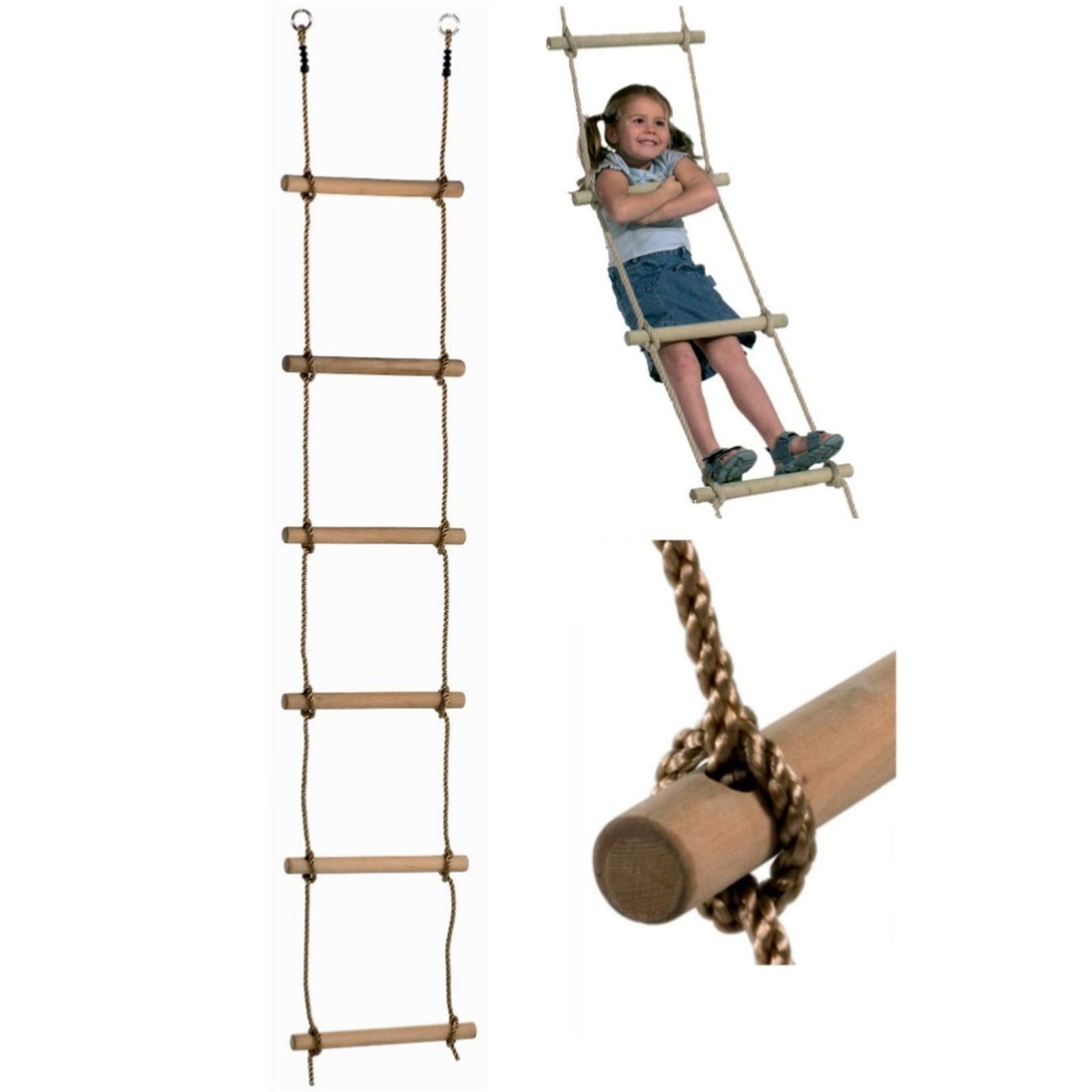
With rope ladders, the interaction between rope, rung and suspension determines stability, grip and service life. Wooden rungs feel warm, offer good support and look perfect in garden environments - provided they are cleanly sanded, robust and free of cracks or splinters. The following applies to ropes: They must remain dimensionally stable, must not twist too much and should hold reliably even in changing weather. Anyone looking for a long-lasting solution pays attention not only to the material itself, but also to the details: How are the rungs drilled, how is the knot or fixation designed, and how is the suspension protected against abrasion? For certain applications, metal or aluminum may be a better choice because it is very durable and stores well - especially if the ladder is transported frequently or used in demanding environments. The category provides an overview of this
Aluminum rope ladder. Especially when used outdoors, it is also important how “easy to care” the set is: wood needs to be checked regularly, ropes should be stored dry and checked for chafe marks, metal parts must be rust-free or appropriately coated.
It's also exciting to look at combinations: If you're planning a small climbing area in the garden or in the house, you can put together rope ladders and other elements to create variety. For example, climbing elements that work more “flatly” are suitable, while the ladder requires vertical movement. The category offers inspiration
Climbing wall– especially if you want to create a training or play zone. If you value a natural look or are planning a DIY project, this is
Wooden climbing wallan obvious starting point because wood fits harmoniously into many living and garden concepts. Regardless of whether it's a ladder or a combination setup: rely on clean workmanship and sensible dimensions. Rungs should be grippy enough, ropes should not chafe, and connecting parts must be suitable for the expected load. A rope ladder is a product that you can “feel” - if it is of high quality, you will notice it the first time you touch it: nothing scratches, nothing creaks, nothing seems improvised. It's exactly these little things that ultimately make the difference between "it works somehow" and "it's really fun - and stays safe".
Security & emergencies: resilience, storage and clear rules
Safety doesn't just start with climbing, but with the question: Who uses the ladder, how often and under what conditions? When children climb, clear rules should apply: no pushing, no crossing at the same time, and no risky jumps. At the same time, the environment has to be right: free area, as soft a surface as possible, no hard edges within reach. Check the ladder regularly for wear - especially at the typical stress points: suspension, knots/crimps, holes in the rungs and places where the rope rubs against wood or metal. When installed outside, UV radiation, moisture and temperature fluctuations are added; As a result, the material ages faster, even if it is of high quality. A brief visual inspection before each intensive use is therefore not excessive caution, but rather good practice. If the ladder is intended for adults (e.g. to "just" climb into the tree house), the load capacity must be designed accordingly - otherwise a children's play equipment suddenly becomes a weak point.
A special case is emergency use. What counts here is not fun, but rather reliable function in a stressful situation. Anyone considering a rope ladder as a means of escape or rescue should specifically consider which lengths make sense, how the ladder is stored (easily accessible, dry, not knotted) and how the attachment works in an emergency. That's exactly what the category is for
Emergency rope ladderthe right starting point. What is important is that an emergency ladder should not disappear “somewhere in the basement”, but should be stowed away in such a way that it can be used at the crucial moment without searching and without complicated maneuvers. It's also worth doing a short test run: unpack, hang up, unroll, stow away again - so that handling is familiar. Regardless of whether it is a play device or a safety solution: a rope ladder is only as good as its assembly. Use suitable, stable attachment points, pay attention to abrasion-resistant transitions and take swinging seriously: If the ladder swings sideways, it either needs better positioning, additional security or a different model. So the rope ladder remains what it should be: a practical, versatile aid - safe, robust and suitable for everyday life.
FAQ
1) What length should my rope ladder be?
Measure the height to the suspension point and also plan how high the lowest rung should end above the ground. A ladder that is too short is impractical, while one that is too long swings more and places greater demands on the fastening.
2) Are wooden rungs or metal rungs better?
Wood is pleasant to hold and visually “natural”, but needs regular inspection (splinters, cracks). Metal/aluminium is very robust and stable in storage, but can feel cooler depending on the environment and should be cleanly processed and rust-free or coated.
3) How do I recognize a safe suspension?
The suspension should fit the load, be low-abrasion and not twist or loosen under tension. Fastening points (beams, hooks, eyelets) must be mounted in a load-bearing manner - if in doubt, it is better to use larger dimensions.
4) How often should I check the rope ladder?
If used regularly: brief visual inspection before climbing (rope, rungs, suspension). Additionally, check more thoroughly at longer intervals, especially after winter, heavy rain or intense sunlight.
5) Can I also use a rope ladder in an emergency?
Yes, but then storage, quick readiness for use, suitable length and reliable fastening should be the focus. Practice handling once so that in an emergency every move is correct.
Guide